
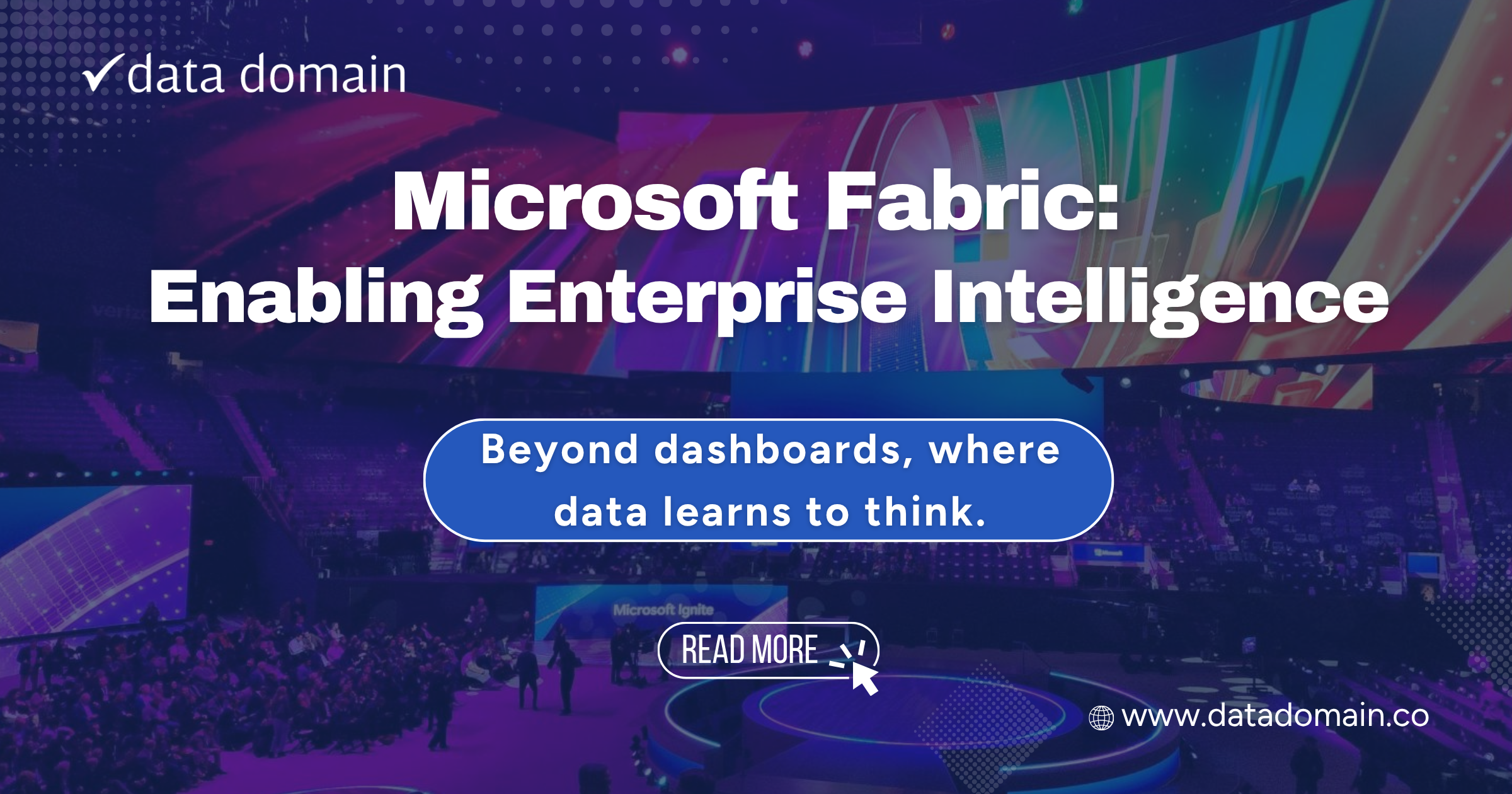
We had the privilege of attending Microsoft Ignite 2025 late last year in San Francisco and as expected, there were plenty of exciting announcements. The most significant for us was the introduction of Microsoft IQ, and in particular, Fabric IQ.
It closed out a big year for leaders in the Data & AI platform space and highlighted a pattern we're seeing everywhere: Once the data foundations are in place, enterprises are moving beyond modern data platforms and toward intelligent, context‑aware systems that understand the business, not just its data.
With Fabric IQ, that shift accelerates dramatically. We're seeing a fundamental change in how customers think about their enterprise data platform, from something that serves analytics, to something that sits at the centre of operational decision‑making across the organisation. Looking at the Ignite announcements and the roadmap for 2026 (with several important features going to GA), things are moving in a very promising direction.
Microsoft has invested heavily into Fabric over the last two years, bringing together established workloads and introducing new capabilities, some great, some still maturing. However, what excites us about Fabric IQ is that it sits as the semantic engine on top of the familiar OneLake and Semantic Models. It means the data assets organisations have already built (assuming they are fit for purpose) can feed into an ontology that unlocks far more value.
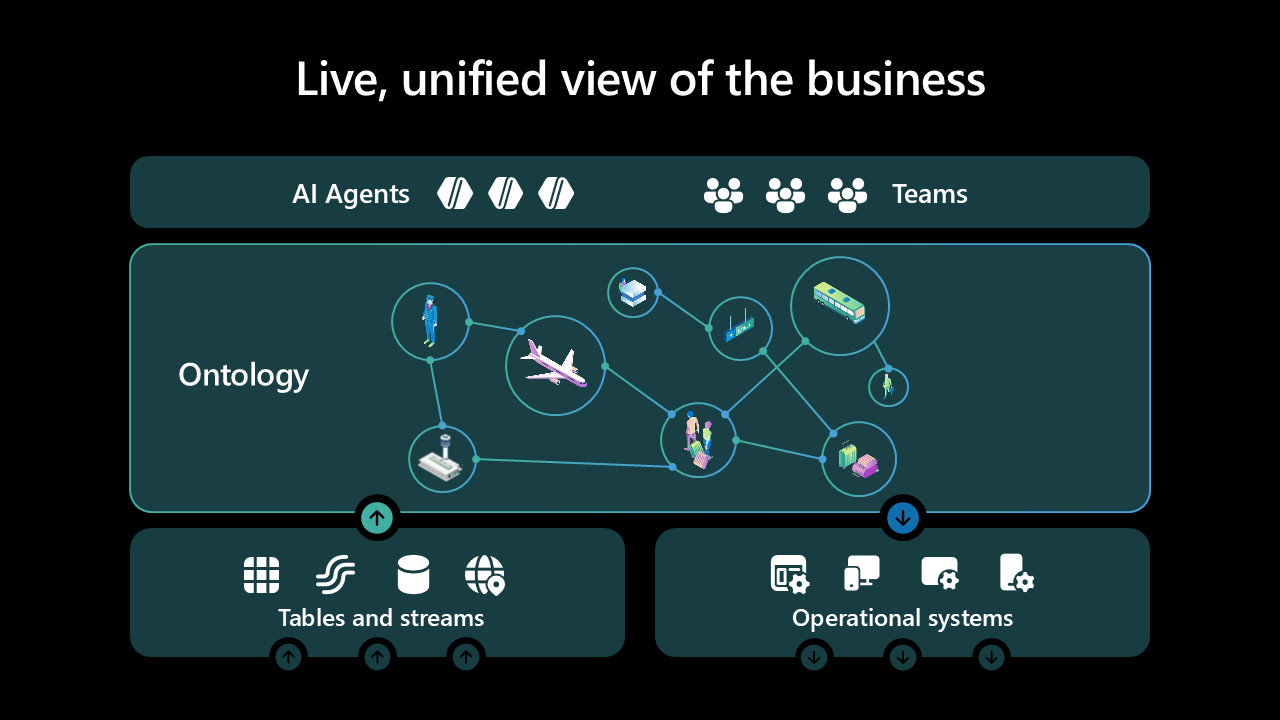
Another major milestone is Digital Twin Builder, which positions Fabric as the first Data & AI platform where an organisation can natively model operational context as an ontology.
Looking ahead, if Microsoft continues to invest well in these capabilities, we see these layers coming together to form the foundation of what is called Enterprise Intelligence - a system that combines unified data, unified semantics and unified context.
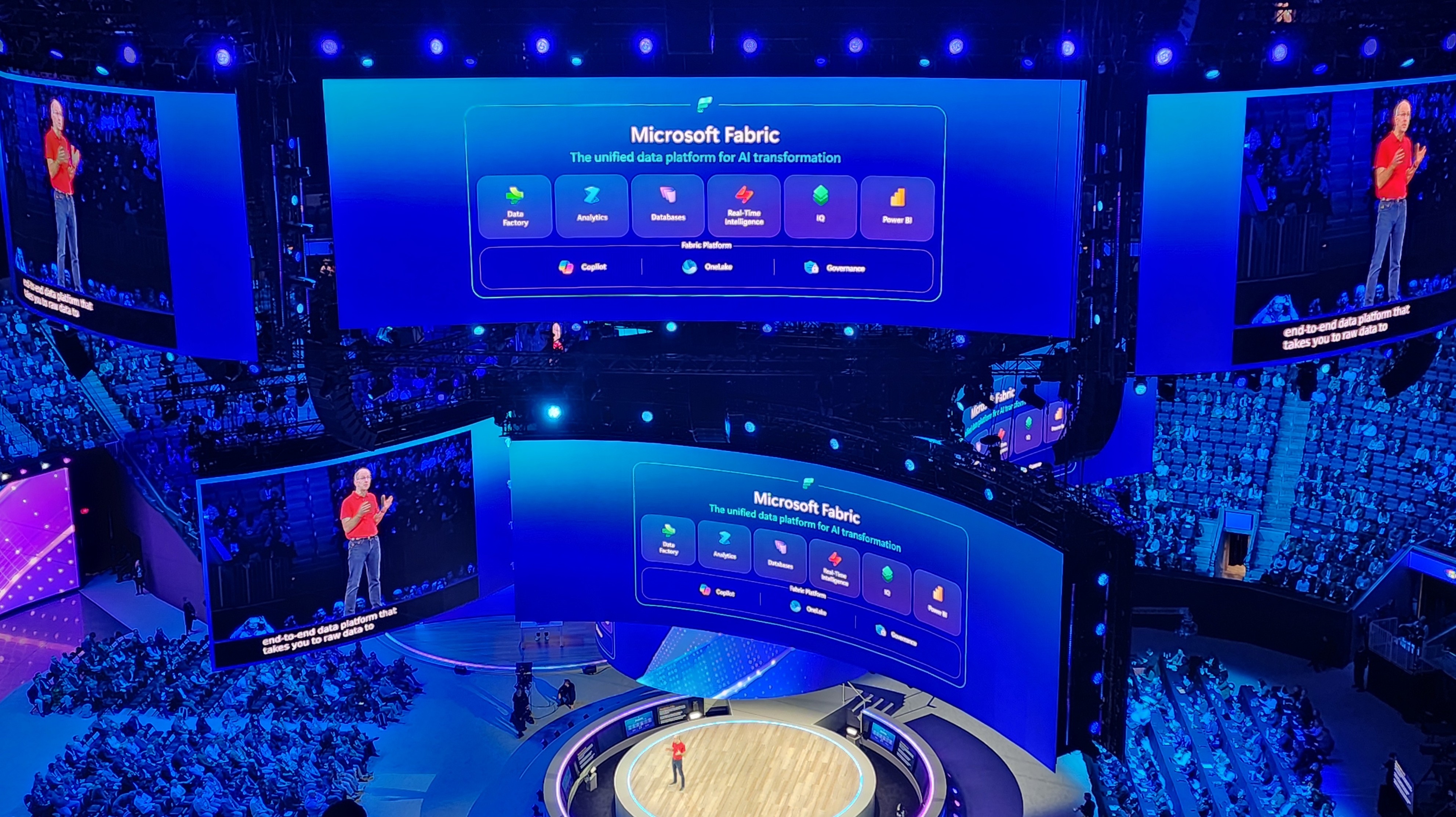
Fabric IQ: A Redefinition of How Customers Think About Intelligence
Fabric IQ is Microsoft's most significant evolution of Fabric to date. It shifts the centre of gravity away from pipelines, storage and reports and toward semantics, relationships, and reasoning.
With Fabric IQ, organisations gain:
- A governed enterprise ontology.
- A unified semantic layer that spans business domains.
- A graph engine capable of real multi‑hop reasoning.
- Business rules and constraints encoded as first‑class assets.
- Data Agents that operate in natural language, grounded in the ontology.
- Native integration points into Microsoft 365, so intelligence is available directly where work happens.
This last point is critical because Fabric Data Agents are not limited to just Fabric. They can surface intelligence through the wider Microsoft 365 ecosystem with the following two widely utilised and significant Microsoft tools:
Microsoft Teams
Many operational decisions occur in the conversational layer, allowing users to ask questions, validate assumptions, or explore relationships directly in Teams without accessing Fabric. The ontology provides meaningful responses, integrating semantic intelligence into daily workflows.
Microsoft Excel
Whether we are willing to admit it or not, Excel remains the leading analytics tool worldwide. Fabric IQ integrates governed definitions, semantic entities, and AI-assisted reasoning into Excel, allowing users to explore data relationships, validate assumptions, and query Data Agents within their spreadsheets. This connects enterprise semantics with familiar and trusted business tools.
This is the real breakthrough. Fabric IQ moves intelligence out of the platform and into the flow of work. Transforming Fabric from a traditional analytics stack into an intelligence platform, one that understands how the business works, what each concept means, and how decisions should be made.
For this reason, we see 2026 as a significant turning point - the year where Fabric IQ elevates semantics to the same level of importance as data and delivers them into the tools people use every day.
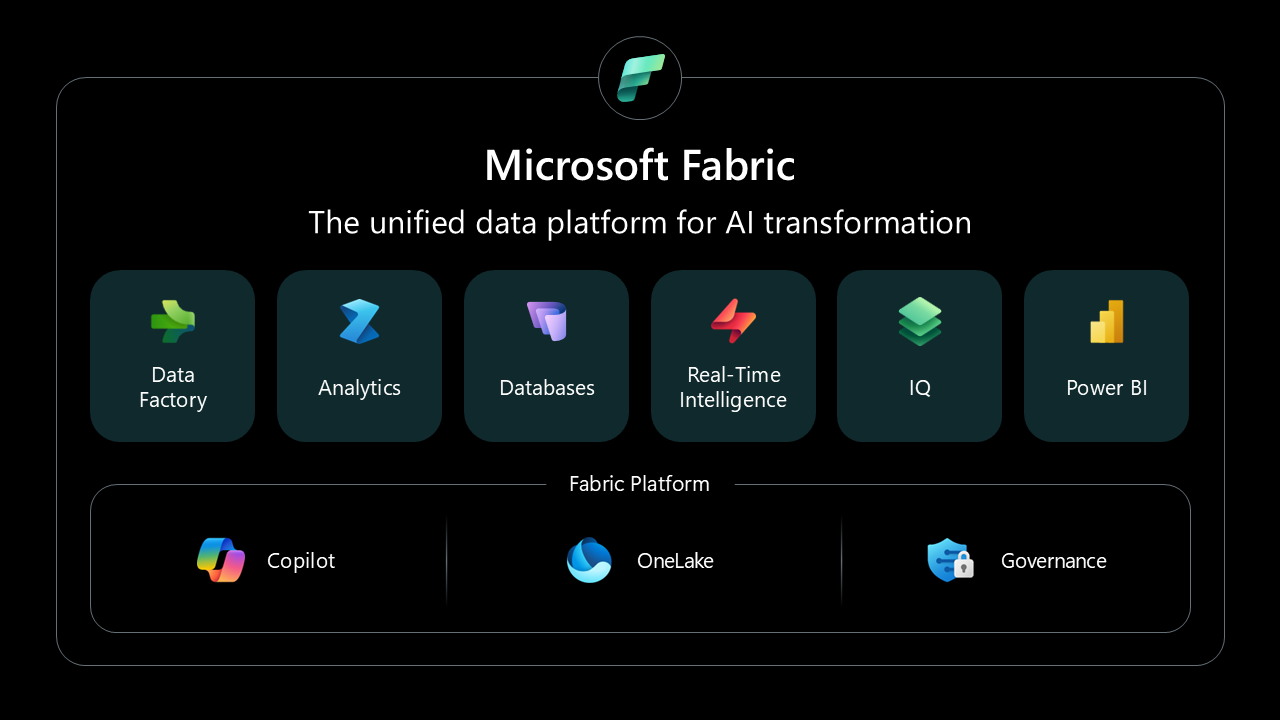
OneLake: The Intelligence Substrate That Makes Fabric IQ Possible
Microsoft's OneLake's early promise was unification. The 2025 and early 2026 enhancements turn OneLake into something more: a governed substrate purpose‑built for AI and semantic reasoning.
Fabric IQ relies on:
- Consistent data access across engines.
- A unified governance and security model.
- Lineage and metadata that can ground semantic reasoning.
By late 2025, OneLake had matured significantly:
- Extending shortcut (no data movement) support for Iceberg tables, Dataverse and On-Premises data sources.
- Low‑latency operational access through mirroring of widely used data stores (e.g SAP, Snowflake, Databricks).
- Shared metadata layer powering Copilot, semantic models and Data Agents.
- A security model that applies consistently across all workloads with fine-grained, lake-native security.
This is why OneLake matters so much in the Fabric IQ story - it becomes the trust layer.
Ontologies are only as strong as the data beneath them. In the case of Fabric IQ, it can function as a semantic brain because OneLake provides the structural and governance integrity required for enterprise reasoning.
Digital Twin Builder: Operational Semantics Feeding the Enterprise Brain
When Microsoft introduced Digital Twin Builder in early 2025, many saw it as a real‑time monitoring tool, but it's far more than that: It is the first Fabric‑native system for modelling operational context as an ontology.
Digital Twin Builder enables organisations to represent:
- Live processes.
- Physical and logical assets.
- Event streams and signals.
- Relationships and dependencies.
- Real‑time contextual behaviours (and acting on it through Operational Agents).
This is the operational layer of Enterprise Intelligence, a continuously updated model of how the business is behaving right now. Where Fabric IQ defines what the business is, Digital Twin defines what the business is doing.
In 2026, these layers start to converge in the following ways:
- A unified operational graph (Digital Twin).
- A unified semantic graph (Fabric IQ).
- A unified data foundation (OneLake).
Together, they form a connected intelligence fabric with the ability to answer analytical and operational questions with meaningful context.
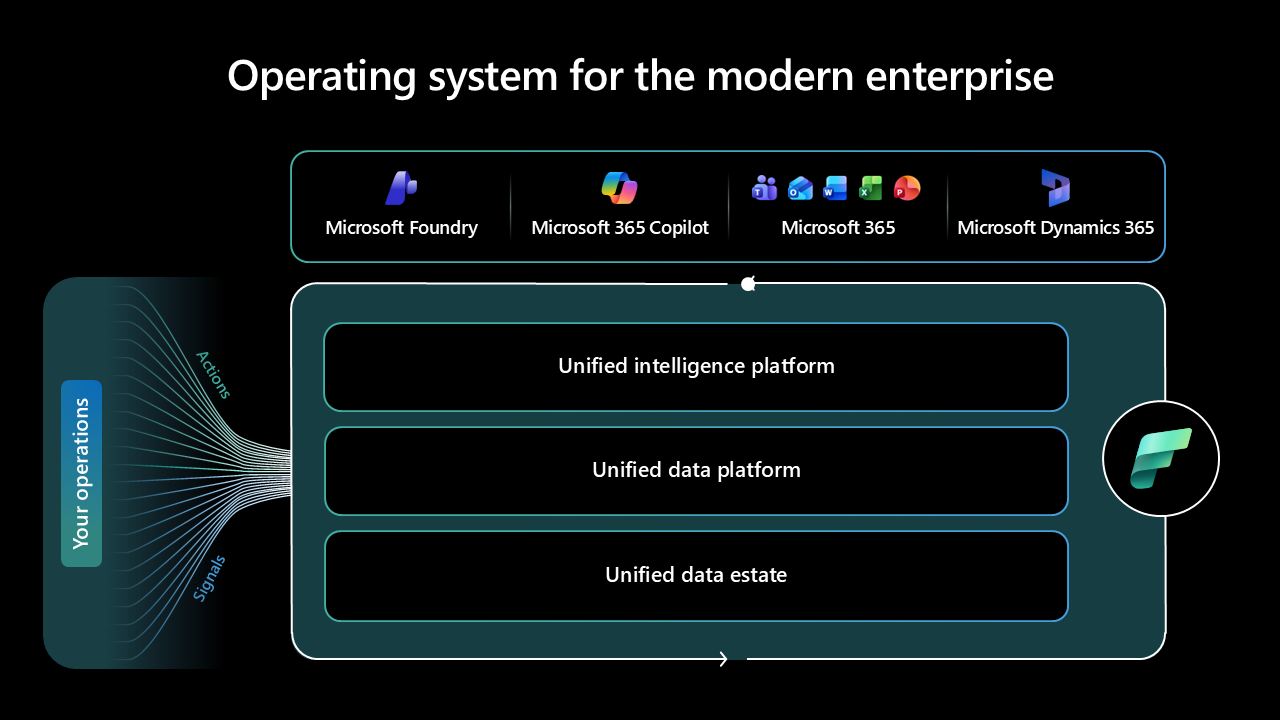
2026: The Year Customers Shift From Data Platforms to Enterprise Intelligence
Organisations we work with increasingly ask:
"How do we go beyond dashboards and pipelines?" and "How do we build systems that understand the business?"
Fabric IQ, supported by OneLake and Digital Twin, provides a compelling answer:
- Data becomes context because semantics define what data represents.
- Context becomes knowledge because relationships and rules give shape to meaning.
- Knowledge becomes intelligence because agents can reason, infer and explain.
This represents a fundamental shift:
- From tables to entities.
- From reports to relationships.
- From pipelines to graphs.
- From dashboards to reasoning.
- From siloed teams to shared semantics.
Fabric IQ shows a clear movement toward platforms that not only store and process data but understand it.
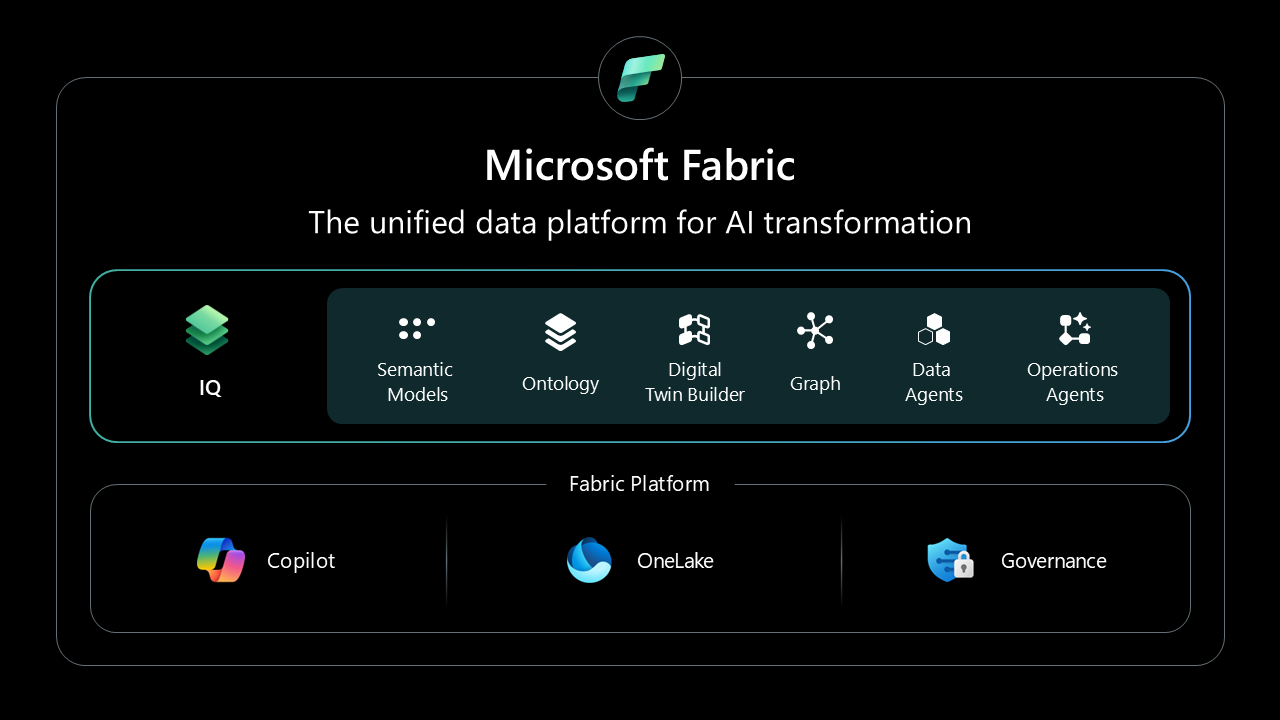
Why We Believe 2026 Is a Pivotal Year
Our role isn't to promote one platform, we aim to help organisations design architectures that create value. From that perspective, Fabric IQ is one of the clearest steps yet toward achieving the following:
- Unified semantics.
- Contextual intelligence.
- Enterprise‑wide reasoning.
- Safe, explainable AI.
Fabric IQ, supported by OneLake and Digital Twin Builder, gives organisations the foundation required to move beyond BI and analytics and into Enterprise Intelligence.
2026 is not the year Fabric becomes "better." It's the year Fabric becomes different, and the year organisations start thinking differently about what their platforms can do.
Contact us to prepare your data foundations or advance beyond traditional analytics. We can help you explore how Microsoft Fabric's unified data, semantic reasoning, and operational modelling can elevate your organisation to enterprise intelligence. Start turning data into meaningful business insight today.
General Enquiries
If you are keen to have a chat with an expert or discuss a project, please fill out the form and we'll get in touch.